Blog

Industries in Focus: Four Paths to the Theatre


The Theatre and Live Performance creatives in the MSLCE program arrived from four different starting points — a Loyola theatre major’s office at the Goodman, a fifteen-year career in Los Angeles indie film, a community theatre audition in Indianapolis at age twenty-one, and a childhood in Blaine, Minnesota that began with a violin at age two. None of them came to MSLCE to learn how to act. Each came to learn how to build something around the acting: a company, a community, a sustainable career, a wider creative life.

What follows is a look at four students working through that question from four distinct angles.

The Self-Made Path: Trent Hawthorne-Richards

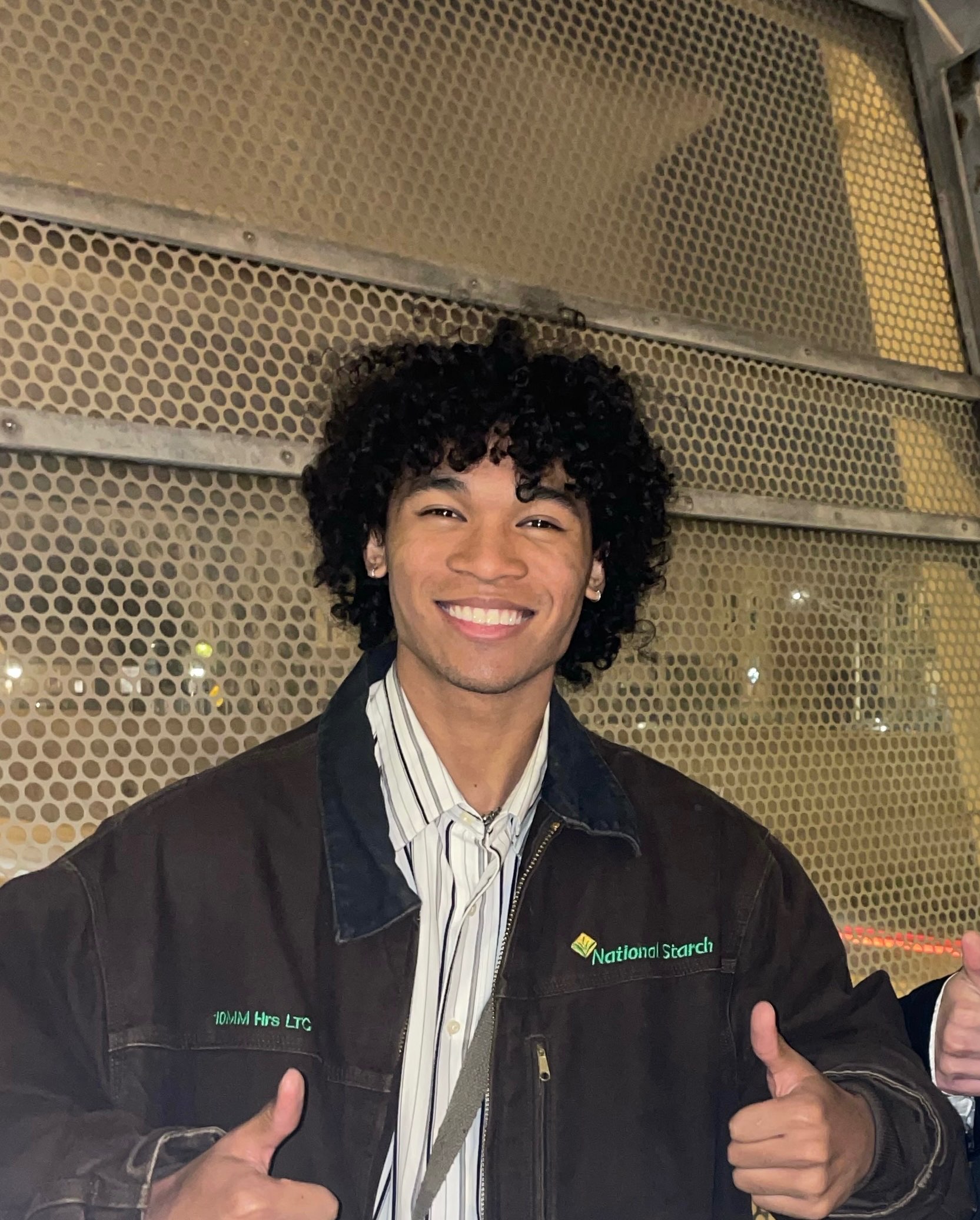
Trent Hawthorne-Richards did not grow up in theatre. He grew up an only child in Indianapolis, finding “solace in different mediums” — film, TV, music, writing. “I’ve always been a cerebral person,” he says. “I really think about my thoughts and try to jot them down.”

His path into performance was almost accidental. At twenty, through a friend who was a rap artist, he met a woman who passed his name along to a community theatre casting director. He nearly didn’t go. “Something in me was telling me, you know, you should go. So I kind of chickened out at first.” He called and asked if he could come another day. They said Saturday. He went. He got the role on the spot. “It’s been trials and tribulations of becoming an actor ever since.”

What followed was self-taught. Without the money or resources to hire collaborators for the work he wanted to make, Trent went to school for the technical side: camera, editing, lighting, audio production. His undergraduate degree is in Media Arts and Science from Indiana University’s Luddy School of Informatics. The model in his head wasn’t a theatre tradition. It was Jay-Z and Roc-A-Fella Records. “Jay-Z was trying to get signed. He couldn’t get signed. And he decided to create his own thing with his team.” His father owned a business; his mother freelanced. “I’ve always been like, you can do the thing. Create your own life. You don’t really have to live by other people’s rules.”

MSLCE has pushed him in directions he wasn’t expecting. “Inside of class and outside of class, it has taught me to be more assertive, more direct, more empathetic, more collaborative.” The team projects, in particular, have been a source of friction and growth. “I feel like I best work alone. I like to work at my own time.” Group deadlines have forced a discipline he didn’t have. They’ve also given him what he calls “a loose blueprint” for life after the program. Class assignments mostly take the shape of consulting work, and he has already begun consulting for a company he was previously doing marketing for. He doesn’t see that as a detour from his art. “There’s nothing wrong with funding your creative pursuits.”

Asked what he wants after graduation, he resists the framing. “I don’t want to put myself in a box. I want to be a working, thriving, successful actor. Successful creative artist. That could be acting. That could be musically. Could be comedy.”

The Multi-Hyphenate: Maelea

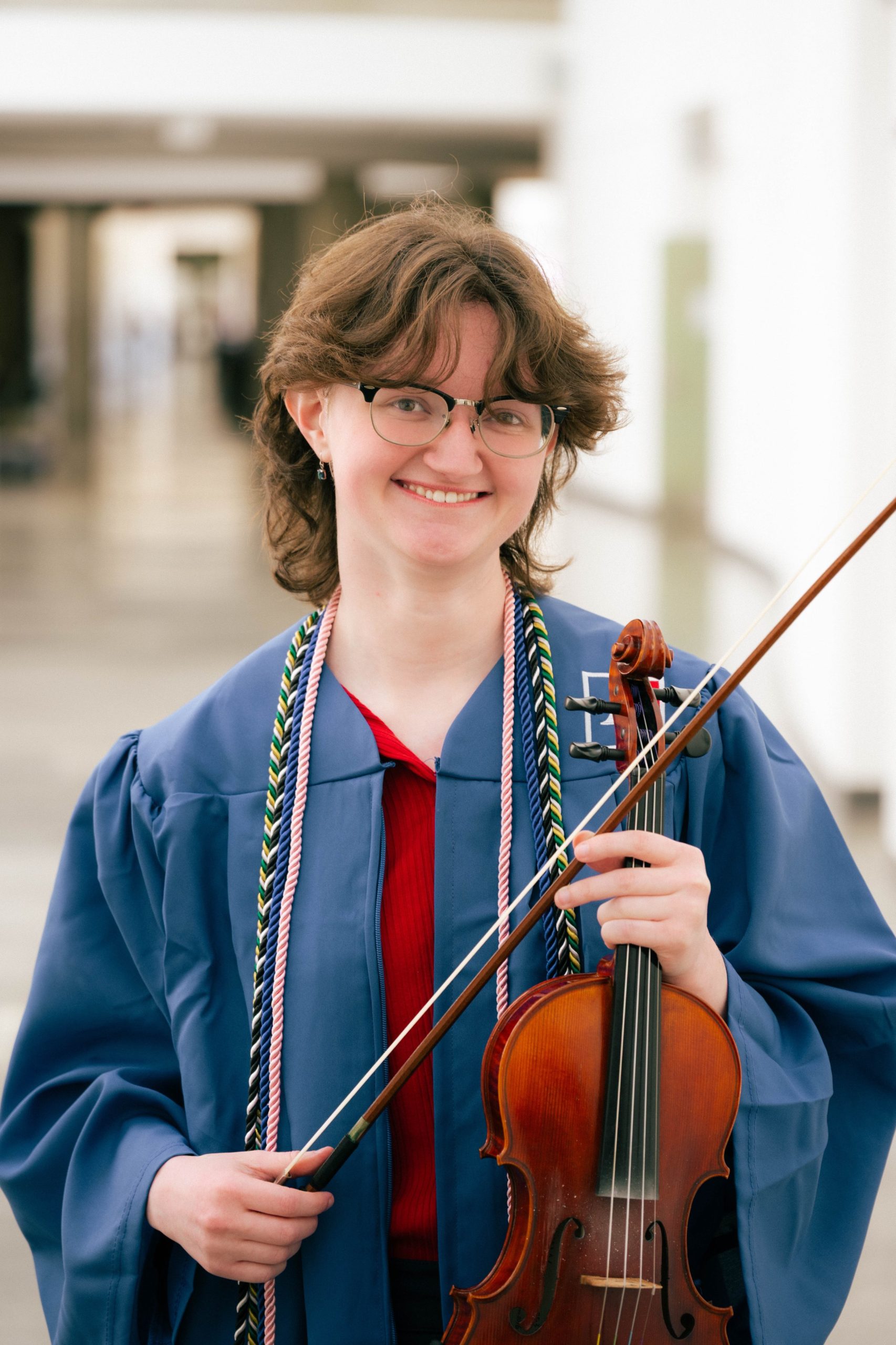
Maelea introduces themself as a jack of all trades, and the inventory backs it up. Violin since age two. Piano. Singing. Musical theatre and regular theatre, on stage and backstage. Visual art in 2D and 3D. Costumes. Props. “I was just a Broadway kid. And an art kid.” They are from Blaine, Minnesota, a small suburb near the Twin Cities, where they did extensive work with Hennepin Arts as part of both the Legacy Project and Critical Review.

The Legacy Project, they say, was “for students of color who were inspired by Hamilton and like diversity and wanting to create representation…basically expanding what people of color can do.” Critical Review took them backstage at productions across the Twin Cities, where they met working actors and directors including, memorably, the actor who played the Phantom in Phantom of the Opera. The reviewers who came to their own shows weren’t always kind. “I was the only person in Pippin who didn’t get an award.”

Maelea is a part-time MSLCE student, taking one or two classes a term, which they describe as “a blessing and a curse,”  the blessing of stretching the program out, the curse of having to choose. “I’ve been offered so many courses to take, and deciding what I want to do in such a little amount of time” has been their hardest challenge. The classes have moved them beyond what they call “a performance-based way of thinking” into networking, branding, and marketing, areas they had not seriously considered before.

The leadership lesson they name is unusual. “I think taking care of yourself. Often as leaders, people are encouraged to go the extra mile and push themselves and push others. But what makes people successful is the ability to take a step back, recognize your limits, and ask for help when needed.” They credit their independent study advisor, Laverne McKinnon, for that lens. McKinnon’s weekly Substack on burnout has reframed their thinking, and a TED Talk McKinnon gave in the Philippines hit Maelea’s Filipino family roots in a particular way.

Their family, they note, would have preferred a more practical path. “I come from a Filipino family, and they’re, like, let me be a nurse.” They describe themself as “the loved black sheep”, the one breaking the mold, with parents who “poured a lot of money, a lot of driving hours, a lot of miles” into their training anyway.

The Insider Going Deeper: Olivia Ash

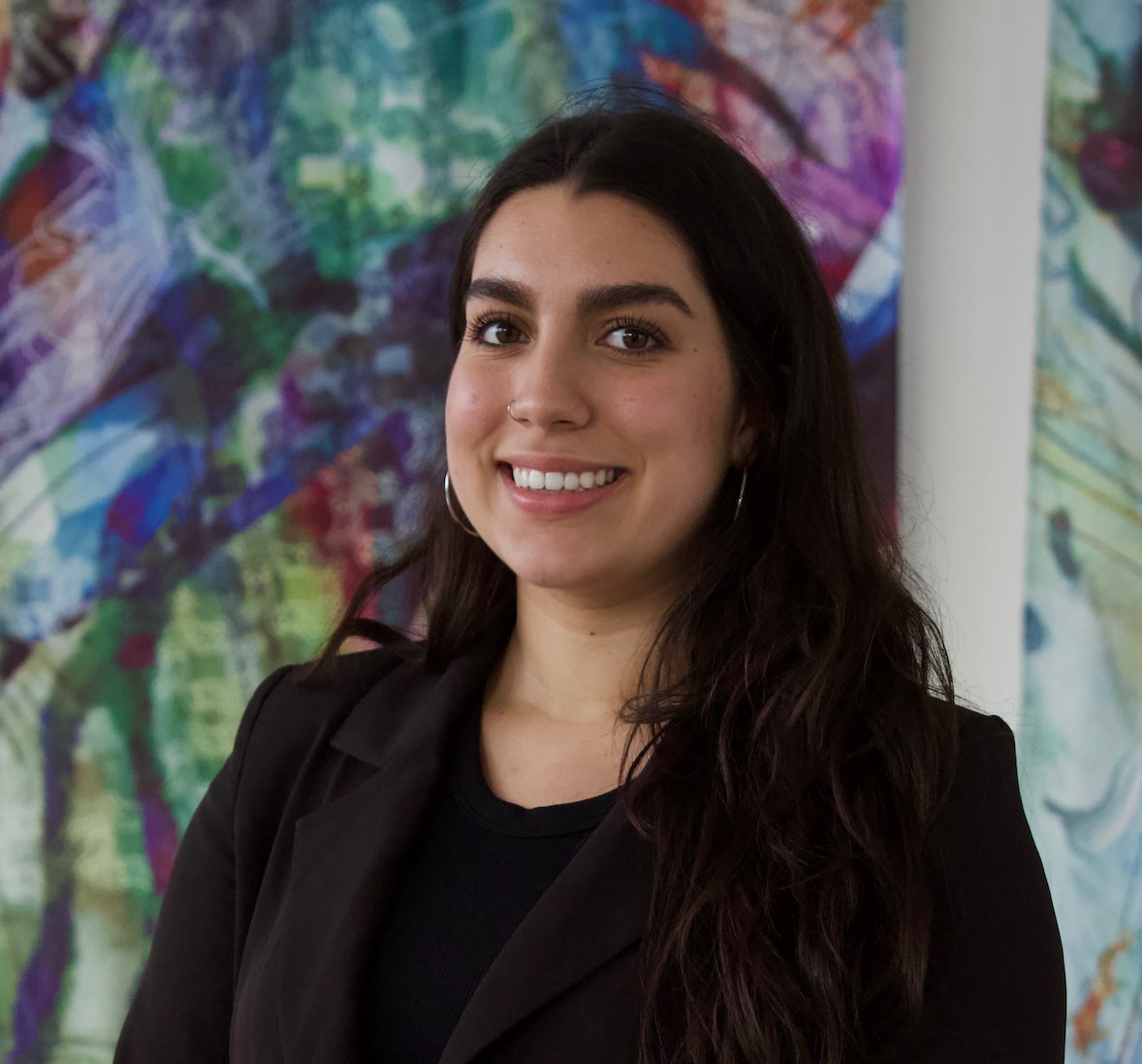
Olivia Ash is the student with the clearest pre-existing relationship to theatre as both art and infrastructure. She studied theatre at Loyola University Chicago with minors in musical theatre, marketing, and management. Her time at Goodman Theatre as a Development Events Coordinator gave her, in her words, “insight into how nonprofit theatre is structured and funded.”

She came to MSLCE to move from the field’s interior into its leadership. “Theatre has always been the love of my life,” she says. “It gave me a sense of home and continues to help me understand life and the world around me.” The program, she says, “has really expanded my perspective. I’m being exposed to new industries and ways of thinking, and it’s teaching me the discipline and leadership skills I need to eventually run my own company.”

Her ambition is specific: artistic director, university teacher, shaper of future artists.

The Ensemble Builder: Zach Kanner

Zach Kanner has been an actor for more than fifteen years, much of it in the Los Angeles indie film scene and ensemble spaces like East Coast Orphans. The longer he worked inside ensembles, the more he found his attention drifting outward. “I started to look outward and understand that I had this great network of friends around me, and we could create something real.”

That shift turned him into a community builder. He began hosting creative salons: gatherings designed to put artists in the same room and let them try things in front of each other. He spent last year doing it with intention. “I just wanted to get the creative people in my life to come together in a place where they could safely share things, get critique if they wanted to, or experiment with things artistically…things that weren’t necessarily in their wheelhouse.” One recent salon, hosted at a fellow MSLCE student’s apartment, drew classmates from across the cohort and their partners. Zach himself used the night to play with a Shakespeare monologue and mask work. Others brought music, AI-driven collaborations, and projects in progress. “I felt like the whole thing worked. People got to know everyone else’s hidden talents. There was sharing, collaborating, taking some artistic risks.” A beat later, dry: “The pizza was really good too.”

MSLCE is the next phase: the business and operational education to turn that instinct into infrastructure. “In the MSLCE program, I’m learning management, how to read a balance sheet, and even how data science can support the arts which are all things I never had touched before.”

One thing the program has changed for him is something he would have flatly rejected a decade ago: networking. “I always had a negative outlook on networking. I always thought of it as kind of phony and mercenary and cringe. I never liked doing it.” MSLCE reframed it. “Approaching it with curiosity is a really helpful paradigm shift. It’s a lot closer to just hanging out and being curious than I gave it credit for. And there’s also a newfound confidence that I have something to bring to the table.”

His vision for what comes next is unusually concrete. “To be a connector, an artistic homemaker, and eventually open an ensemble theatre that expands into a film festival space, a gallery, maybe even a coffee shop or bookstore. Something that becomes a true community space.” The phrase artistic homemaker came to him mid-conversation and stuck. “I have been really interested in creating spaces where creative people can come together and share ideas and create new things together. I get a lot of satisfaction being the relative between two people — they meet, and then they go off and do something really cool on their own. It gives me so much happiness.” Then, half-laughing at himself: “A mother hen bringing little creative chicks together.”

On and Off the Stage

What ties these four together is a shared recognition that the stage, on its own, is not enough. Trent is consulting for a marketing company while he builds his acting career. Maelea is moving from performer toward someone who also understands branding. Olivia is studying the structures she has already worked inside. Zach is learning to read a balance sheet.

MSLCE teaches them how to build the systems around the work  to lead collaboratively, to fund what they make, to engage audiences with intention. They are part of a growing network at Northwestern redefining what it means to work in live performance: not as solo artists waiting for the next role, but as builders of the spaces where the next role can exist.

A Frequency of Their Own: How MJ and Jessie Found Each Other at MSLCE

Meredith Johnson ’26 –MJ, for short– heard Jessie B. Evans ‘26 before she met him.

It was orientation day, after a full program welcome she would later describe as being “hosed down with information.” Outside, the cohort had spilled into a mixer of wine and small plates, the early choreography of a group of people still learning each other’s names. Then a voice. Deep, unmistakable, “on a different frequency,” as MJ puts it. A laugh after it. Then a joke. (more…)

Announcing our Spring Quarter Creative Connect

Maureen Fan HeadshotWe’re thrilled to announce our Spring Quarter Creative Connect, with Baobab Studios Co-Founder + CEO and MSLCE Industry Advisory Board member, Maureen Fan! Maureen will be joining us at 12:30pm on Wednesday, April 15, at our home base at the Frances Searle building on Northwestern’s Evanston campus. This event is free and open to the public; lunch will be provided for all attendees.

(more…)

Shaping Future Work Without Forgetting Lessons of the Past

Questions about the future of work are everywhere. But the answers many leaders are looking for don’t appear as they look toward what’s next. Sometimes, they’re hiding in the details of what already happened.  

That’s why Professor Leslie DeChurch’s research moves between the two—future and past—and examines how they inform one another. 

To do this, her work centers on three areas:  (more…)

Screen Time: TV Writer Sam Bailey Joins Creative Connect

In February, the program welcomed Emmy-nominated TV writer and director Sam Bailey to campus for our second Creative Connect of the year.

Sam Bailey is an Emmy-nominated writer and director from Chicago. Bailey directed and co-executive produced the first 3 episodes of Marvel’s series IRONHEART. She is the co-creator of the acclaimed Emmy-nominated webseries BROWN GIRLS and the creator of the Gotham-nominated webseries YOU’RE SO TALENTED, which premiered at Tribeca. (more…)

New Funding Realities Mean New Skills for Nonprofit Leaders

For nonprofits and social impact organizations, today’s funding landscape doesn’t look anything like it used to. Traditionally consistent sources of revenue are drying up or becoming less reliable. Meanwhile, the expectations haven’t stopped: Every day, nonprofits are being asked to stretch limited resources further.

As Kellogg School of Management Clinical Assistant Professor and Director of Northwestern’s Golub Capital Board Fellows Program Allison Henry points out, nonprofits and social impact organizations have typically been able to count on four revenue streams: (more…)

Faculty Director Aymar Jean Escoffery talks MSLCE with Dynasty Podcasts

Last month, our director Dr. Aymar Jean Escoffery joined Dynasty Podcasts to talk about the MSLCE program, how it bridges creative practice and business leadership, and what it takes to build a sustainable career in today’s creative industries. Click the link below to learn more about his insights on navigating a fast-changing media landscape. (more…)